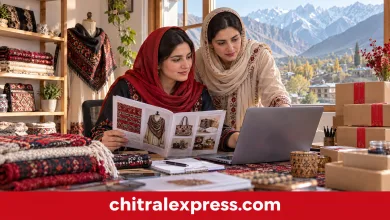
Women founders who use artificial intelligence may be getting practical value from it—but they are less likely than men to use it, according to a 2026 U.S. survey. The finding offers a useful question for entrepreneurs in Pakistan: can carefully chosen AI tools reduce the time spent on routine business work, without replacing judgement or exposing customer data?
Gusto’s 2026 New Business Formation research surveyed 1,051 founders who started businesses in 2025. It found that 64% of male founders and 56% of female founders used AI to help launch their businesses. The figures describe surveyed U.S. founders; they are not estimates for Pakistan and should not be read as proof that the same gap exists here.


Women users reported a practical benefit
The difference is not simply about who tries the technology. In a separate analysis of the same survey, Gusto reported that 54% of women who used AI said it made starting their business easier or less expensive. Among men who used AI, 47% said the same. Gusto also found that men were 23% more likely than women to use AI regularly in their new businesses.
These results are self-reported and do not prove AI caused a business to launch, grow or earn more. They do, however, suggest that entrepreneurs who test useful tools may find time-saving applications—and that adoption may be uneven. Gusto’s broader report found women’s share of all new U.S. businesses fell from 49% in 2024 to 44% in 2025, while women’s share among Gen Z-led new businesses rose from 38% to 47%. The report attributes the overall shift partly to changes in the mix of industries where new firms were formed.
Why this matters for Pakistan
Pakistan’s Ministry of Commerce and Trade Development Authority of Pakistan have set out a 2025–2030 National Women Entrepreneurship and Export Development Strategy. It calls for support across a business’s life cycle—from early idea and start-up stages to growth and export readiness—and includes digital trade, e-commerce and market access among its priorities. The strategy is a policy roadmap; its stated goals should not be mistaken for proof that every proposed service is already available.
For women-led businesses in Chitral and elsewhere, small, low-risk uses may be more practical than trying to automate an entire company. A local craft producer could draft product descriptions in Urdu or English, then check that materials and measurements are accurate. A guesthouse or tour operator could prepare answers to common customer questions. A home-based food business might organize a weekly inventory list or generate a first draft of a social-media calendar.
In each case, the owner remains responsible for checking the final work. AI can invent details, miscalculate totals or produce awkward translations. Do not enter customer records, private financial information or sensitive business material into a tool until you have checked its privacy and data-retention terms.
A simple way to test a tool
Choose one repetitive task and record how long it takes without AI. Try a tool on a small sample using non-sensitive information. Compare the result for accuracy, language quality and time saved, and include any subscription or data costs. If the output needs extensive correction, it may not be useful for that task.
For women entrepreneurs, the goal is not to adopt AI because it is fashionable. It is to make a specific part of running the business easier while preserving the owner’s expertise and customer trust. Gusto’s U.S. findings do not establish what Pakistani founders are doing, but they point to a question worth testing locally: which routine tasks could responsible digital tools help women-led firms handle more efficiently?
Sources
- Gusto — 2026 New Business Formation: How AI Is Reshaping Who Starts a Business in America, May 14, 2026
- Gusto — A Gender Gap Is Emerging at the Frontier of AI-Enabled Entrepreneurship, June 24, 2026
- Gusto — New Business Formation: The AI Advantage, 2026 report
- Trade Development Authority of Pakistan / Ministry of Commerce — National Women Entrepreneurship and Export Development Strategy 2025–2030


Muhammad Nayab Khan is a seasoned Freelance Journalist, Media Professional, and Enterprise Development expert based in Chitral, Khyber Pakhtunkhwa, Pakistan. Holding an MBA in Finance from Punjab University, he brings a unique economic and digital perspective to media storytelling, corporate branding, and regional development. He maintains active professional affiliations with Qashqar TV (First PEMRA Licensed WebTV in Chitral) and Chitral Express (Chitral’s Largest News Network), where he contributes high-impact digital content, editorial visuals, and comprehensive coverage of regional socio-economic issues. As a multi-faceted entrepreneur and media creator, Nayab combines sharp investigative insight with advanced visual communication to highlight local narratives on regional and national platforms.